How loud is meat processing?
| Machine, task | Level | Source |
|---|---|---|
| Bowl cutter without lid, sausage meat production | approx. 100 dB(A) | Suva sound level table 86373 |
| Splitting saw, primary cutting | approx. 95 dB(A) | Suva sound level table 86373 |
| Meat bowl cutter, average of 150 measurements | 91.6 dB(A) | BGN noise compendium |
| Bowl cutter with lid, sausage meat production | approx. 90 dB(A) | Suva sound level table 86373 |
| Multihead weigher, average of 107 measurements | 89.7 dB(A) | BGN noise compendium |
| Sausage clipping machine, average of 40 measurements | 87.9 dB(A) | BGN noise compendium |
These are machine levels, not daily exposure. How high the exposure over the shift is depends on how long someone works at the cutter or the saw. At 100 dB(A), the daily exposure of 85 dB(A) is reached after about a quarter of an hour, at 92 dB(A) after just over an hour and a half. According to Suva, a closed noise protection lid lowers the level at the cutter by around 10 dB(A).
Detectable and blue
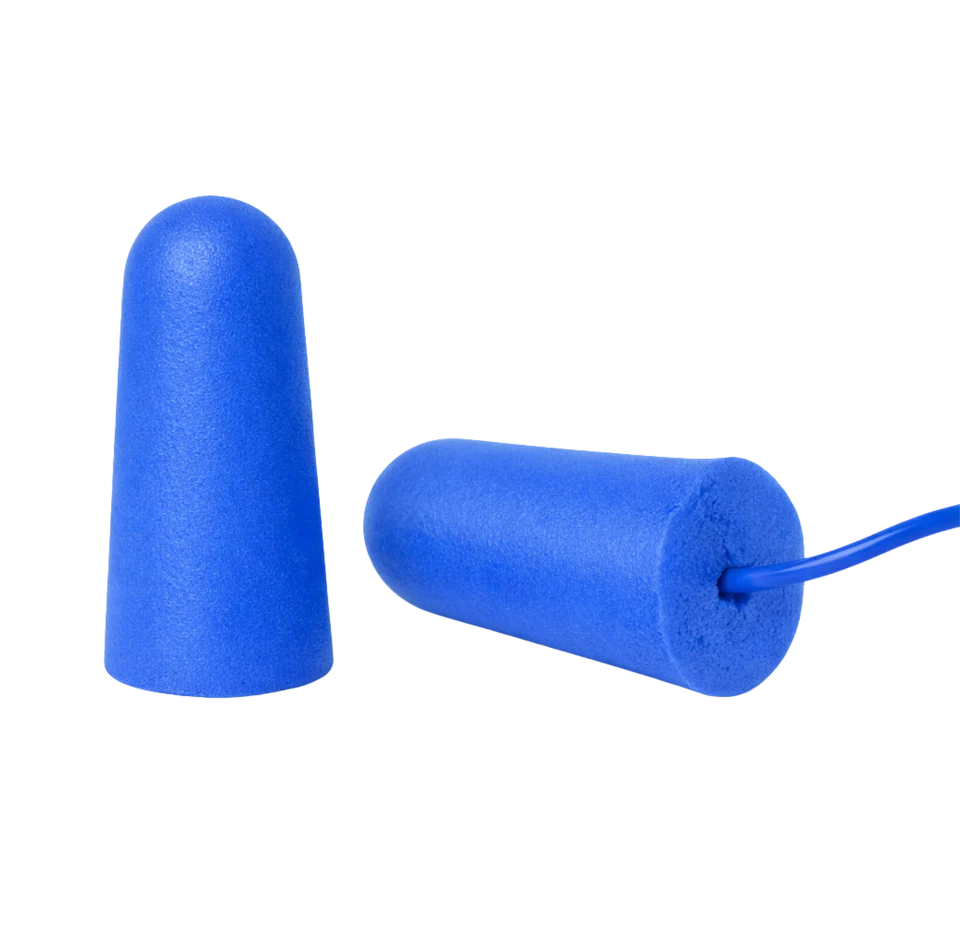
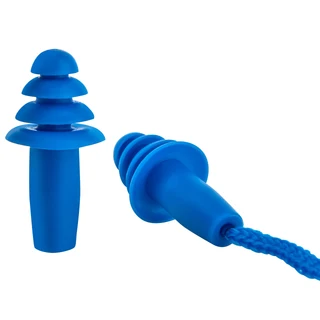
For production areas, there is detectable hearing protection: the EP1227BD disposable earplugs are blue and have a cord made of PVC with brass that a metal detector can pick up. Whether your line finds the earplug reliably depends on the detector, its sensitivity and the product; test it with a sample. More in the guide Detectable hearing protection in the food industry.
Which hearing protection at the bowl cutter?
In production with foreign body control, the EP1227BD detectable earplugs are the choice from the range: blue, with a cord made of PVC with brass, SNR 37 dB, H/M/L 37/35/30 dB. At the bowl cutter without lid at around 100 dB(A), 74 dB(A) reaches the ear by calculation, right in the target range of 70 to 80 dB(A). At the splitting saw (95 dB(A)) it is 69 dB(A), with the cutter lid closed (90 dB(A)) 64 dB(A). For this quieter work, the risk assessment should check whether shouts and warning signals remain audible, see Overprotection.
| Hearing protection | Effective | Bowl cutter with lidapprox. 90 dB(A) | Splitting sawapprox. 95 dB(A) | Bowl cutter without lidapprox. 100 dB(A) |
|---|---|---|---|---|
| EP1227BDDetectable earplugs in blue EP1227BD, SNR 37 | 26 dB | 64 dB(A)Too strong?Check for overprotection | 69 dB(A)Too strong?Check for overprotection | 74 dB(A)RecommendedRecommended |
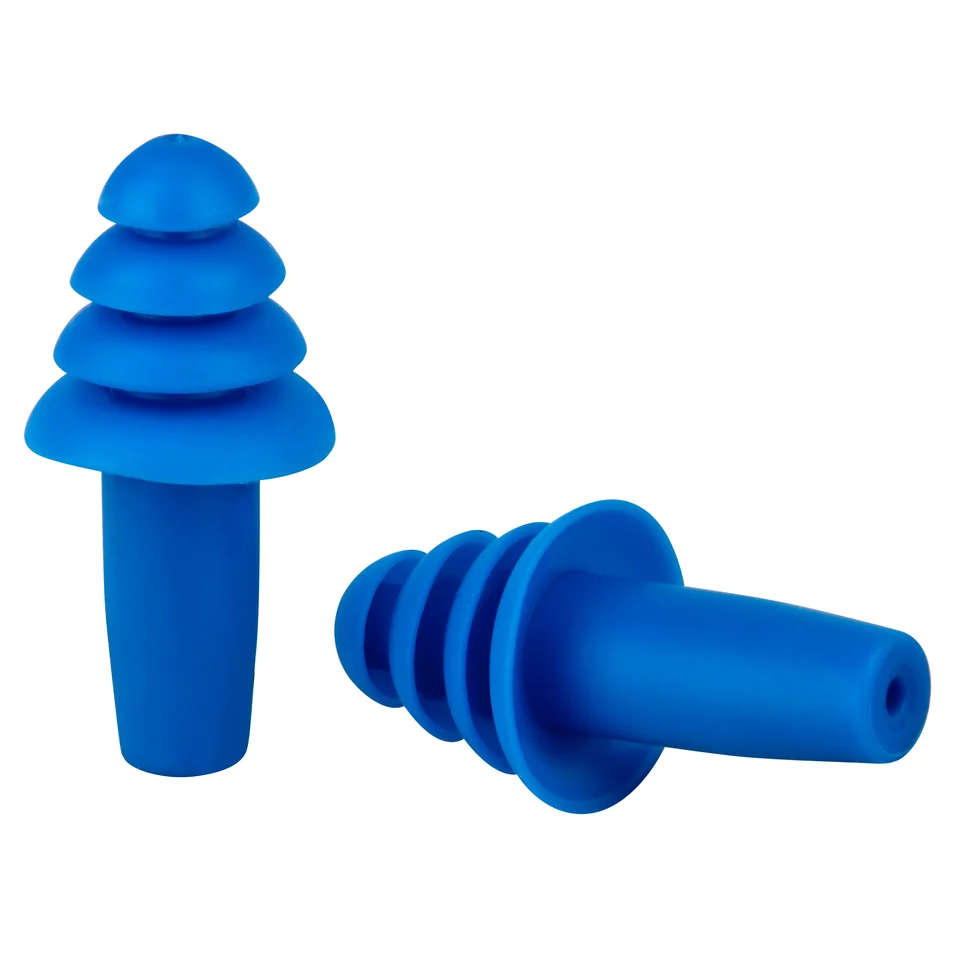
| EP002BReusable TPE earplugs EP002B, SNR 32 | 24 dB | 66 dB(A)Too strong?Check for overprotection | 71 dB(A)RecommendedRecommended | 76 dB(A)RecommendedRecommended |
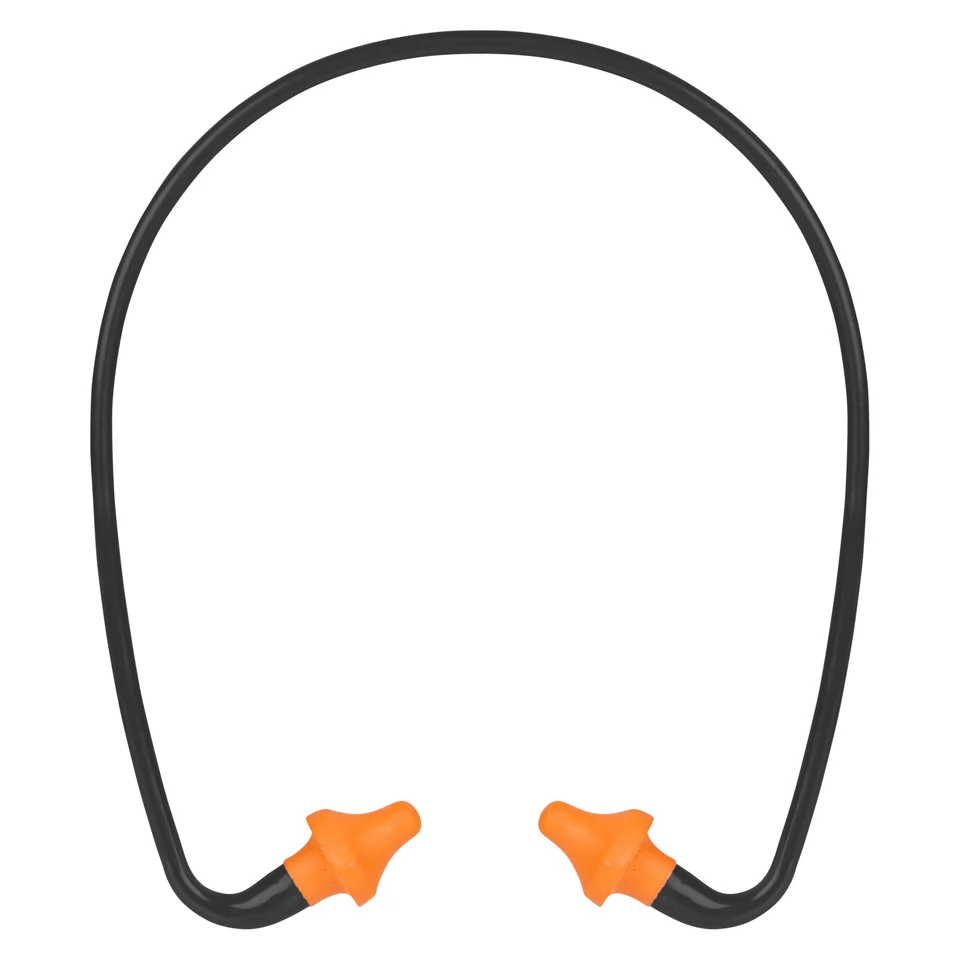
| EP100BYBanded earplugs EP100BY, SNR 29 | 21 dB | 69 dB(A)Too strong?Check for overprotection | 74 dB(A)RecommendedRecommended | 79 dB(A)RecommendedRecommended |
| EP904EP904 earmuffs EP904, SNR 28 | 20 dB | 70 dB(A)RecommendedRecommended | 75 dB(A)RecommendedRecommended | 80 dB(A)RecommendedRecommended |
| EP102BOBanded earplugs with conical tips EP102BO, SNR 27 | 19 dB | 71 dB(A)RecommendedRecommended | 76 dB(A)RecommendedRecommended | 81 dB(A)Not rec.Not recommended |
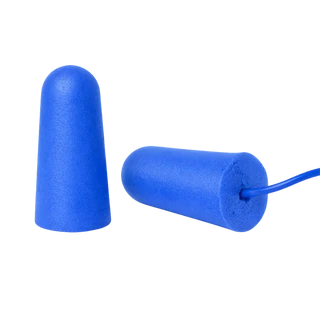
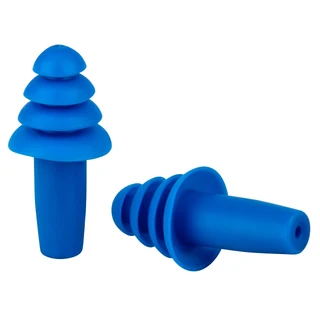
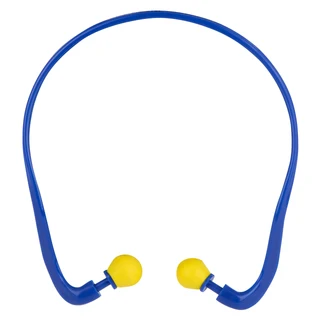
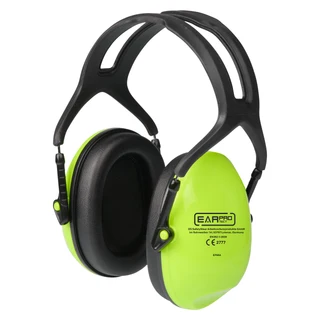
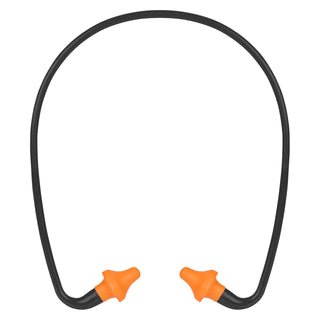
Where detectable hearing protection is not required, the reusable TPE earplugs (76 dB(A)), the EP100BY banded earplugs (79 dB(A)) and the EP904 earmuffs (80 dB(A)) are also in the target range at the bowl cutter without lid. With the lid closed at around 90 dB(A), the lighter ones fit: the EP904 earmuffs (70 dB(A)) and the EP102BO banded earplugs (71 dB(A)).
According to the user instructions, corded earplugs must not be used where the cord could get caught during use. At the bowl cutter and other machines with open moving parts, this belongs in the risk assessment.
In the butcher’s shop and cutting room
- Issue at the entrance to the hygiene area, dispose of in designated bins.
- Corded earplugs hang around the neck during breaks and cannot fall into the product.
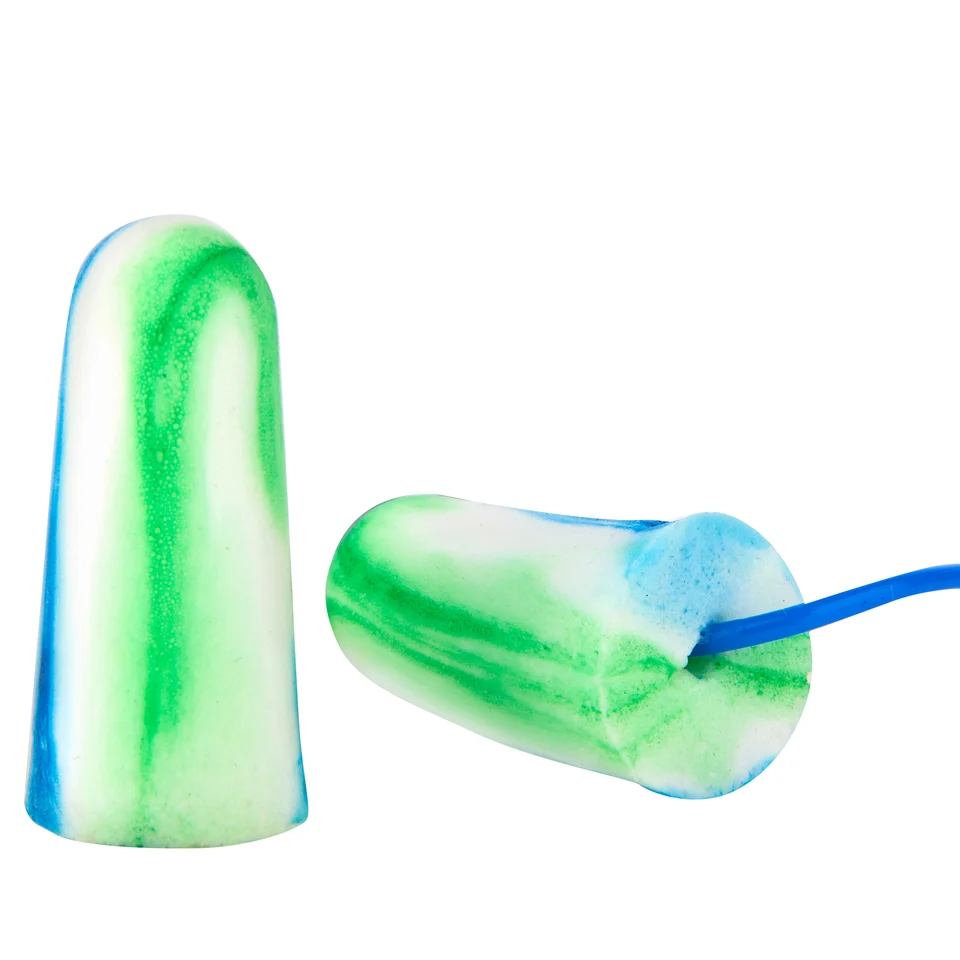
- Insert foam earplugs with clean, dry hands: here is how to do it correctly.
- Mark noise areas where the daily exposure can exceed 85 dB(A) (Article 5(3) of Directive 2003/10/EC).
Frequently asked questions
How loud is a meat bowl cutter?
Typically around 100 dB(A) for sausage meat production without the lid and around 90 dB(A) with the lid closed (Suva sound level table 86373). The BGN gives 91.6 dB(A) as the average of 150 measurements in the Mela database.
Which hearing protection for butchers?
In production with foreign body control, the EP1227BD detectable earplugs with a cord made of PVC with brass. At the bowl cutter without lid at around 100 dB(A), 74 dB(A) reaches the ear by calculation, within the target range of 70 to 80 dB(A). For quieter work it attenuates more than necessary; the risk assessment clarifies whether shouts and warning signals remain audible.
Do butchers have to wear hearing protection?
That depends on the daily exposure. From 80 dB(A), the employer must make hearing protection available; from 85 dB(A), it must be worn. At the bowl cutter without lid at around 100 dB(A), the daily exposure of 85 dB(A) is reached after about a quarter of an hour.
Sources
- Suva: sound level table for slaughterhouses and butcher's shops, no. 86373, 2026 edition (typical exposures for noise sources, zones and activities), in German
- BGN noise compendium, noise data per machine (evaluation of the Mela database), in German
- Directive 2003/10/EC on the minimum health and safety requirements regarding the exposure of workers to noise
Typical values for estimation. They do not replace a measurement or a risk assessment. As of 5 October 2026.