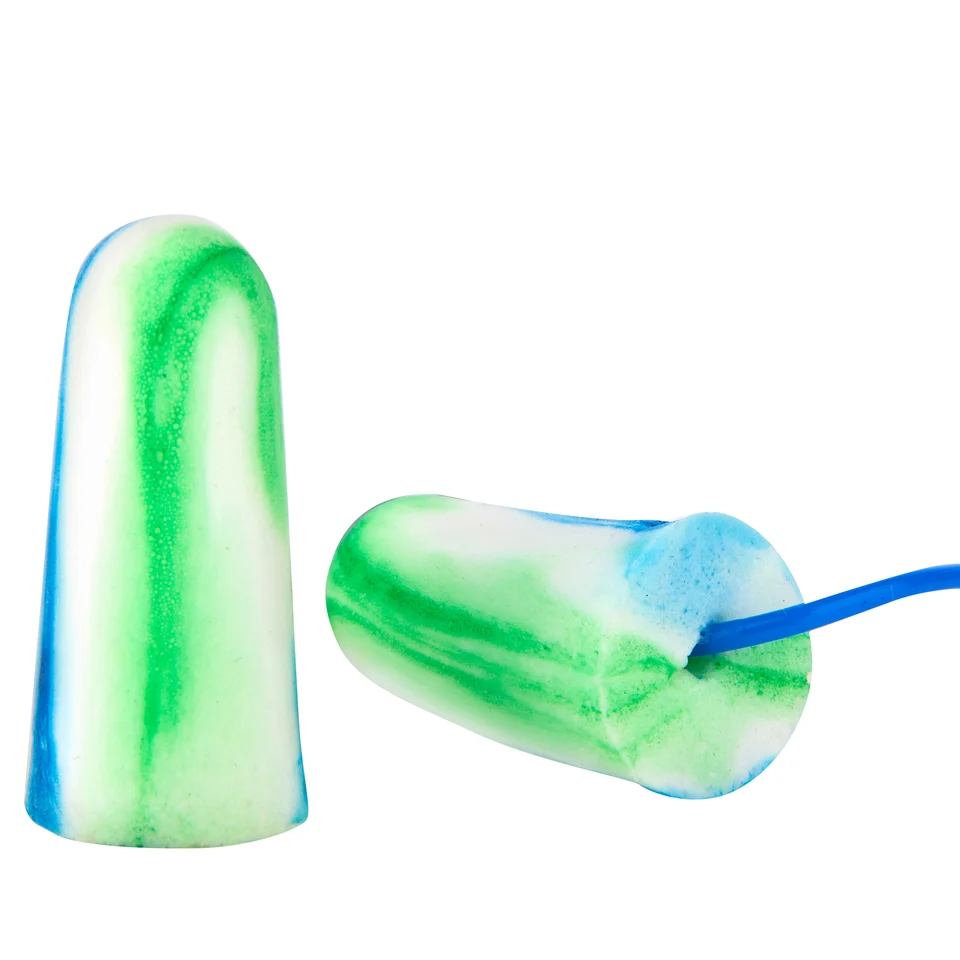
Noise levels on site by trade
| Occupation, task | Daily exposure |
|---|---|
| Crash barrier installers | 101 dB(A) |
| Corrosion protection workers | 100 dB(A) |
| Demolition: drilling and sawing concrete | 97 dB(A) |
| Sewer construction workers | 95 dB(A) |
| Track workers | 94 dB(A) |
| Floor layers: industrial floors, split tiles, cast stone | 94 dB(A) |
| Formwork carpenters | 92 dB(A) |
| Civil engineering workers: specialist foundation work | 92 dB(A) |
| Carpenters | 91 dB(A) |
| Structural metalworkers: steel construction | 91 dB(A) |
| Asphalt pavers | 91 dB(A) |
| Facade installers | 90 dB(A) |
| Construction labourers | 89 dB(A) |
| Road builders: preparing road surfacing | 89 dB(A) |
| Road marking workers | 89 dB(A) |
| Structural metalworkers: metalwork on site | 88 dB(A) |
| Heating and plumbing installers | 88 dB(A) |
| Bricklayers: masonry, formwork, reinforcement, concrete, plastering | 88 dB(A) |
| Parquet layers | 88 dB(A) |
| Drywall installers | 88 dB(A) |
| Building sheet metal workers | 87 dB(A) |
| Roofers | 87 dB(A) |
| Steel fixers on site | 86 dB(A) |
| Scaffolders | 86 dB(A) |
| Plasterers: machine plastering | 85 dB(A) |
| Tilers | 84 dB(A) |
Why hearing protection matters so much on site
Noise-induced hearing loss cannot be cured. According to BG BAU, it is the second most common occupational disease in Germany; BG BAU alone recognises around 1,000 cases every year (as of 2011).
It is not only the people at the machine who are at risk. BG BAU expressly points out that workers close to noisy work can also damage their hearing. If a tool bears the mandatory sign “Wear ear protection”, you can assume that the daily noise exposure will be exceeded when it is used. Hearing protection should then be worn even for short jobs.
Which hearing protection for construction workers?
| Hearing protection | Effective | Daily exposure, labourersapprox. 89 dB(A) | Impact drillapprox. 97 dB(A) | Circular sawapprox. 101 dB(A) |
|---|---|---|---|---|
| EP1227BWGDisposable foam earplugs EP1227BWG, SNR 37 | 26 dB | 63 dB(A)Too strong?Check for overprotection | 71 dB(A)RecommendedRecommended | 75 dB(A)RecommendedRecommended |
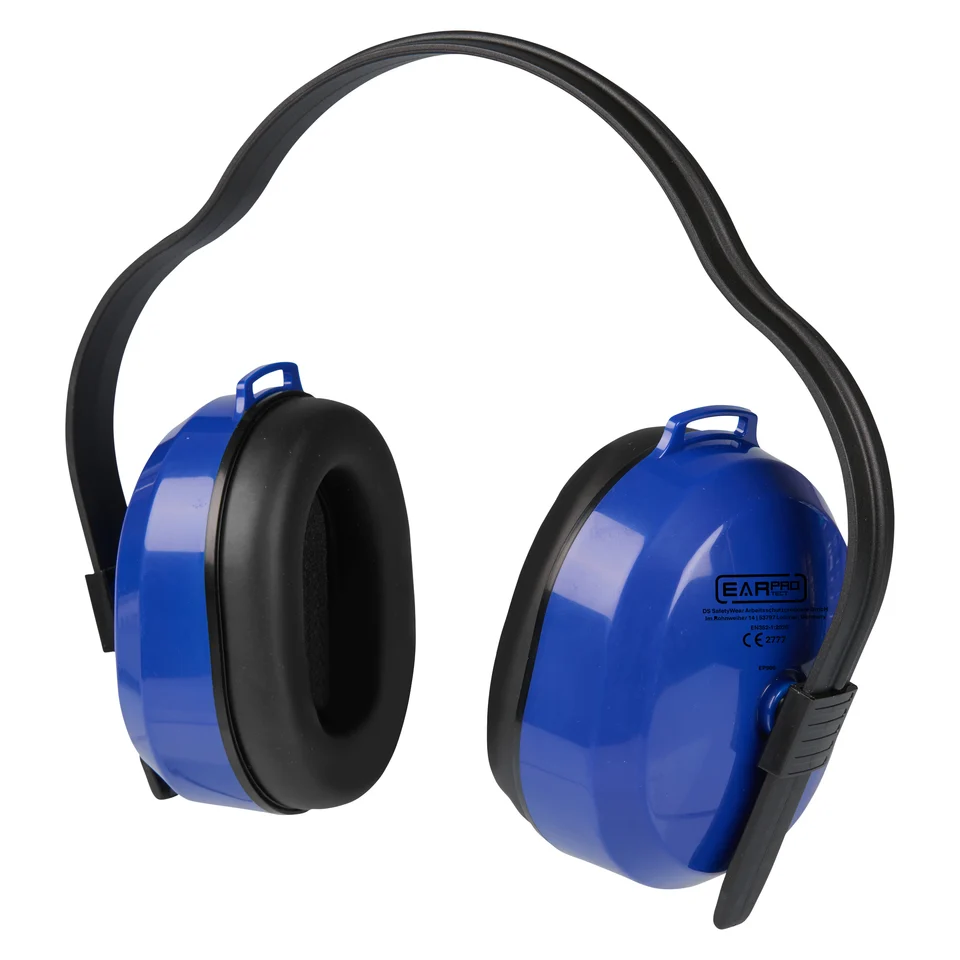
| EP902EP902 earmuffs EP902, SNR 33 | 26 dB | 63 dB(A)Too strong?Check for overprotection | 71 dB(A)RecommendedRecommended | 75 dB(A)RecommendedRecommended |
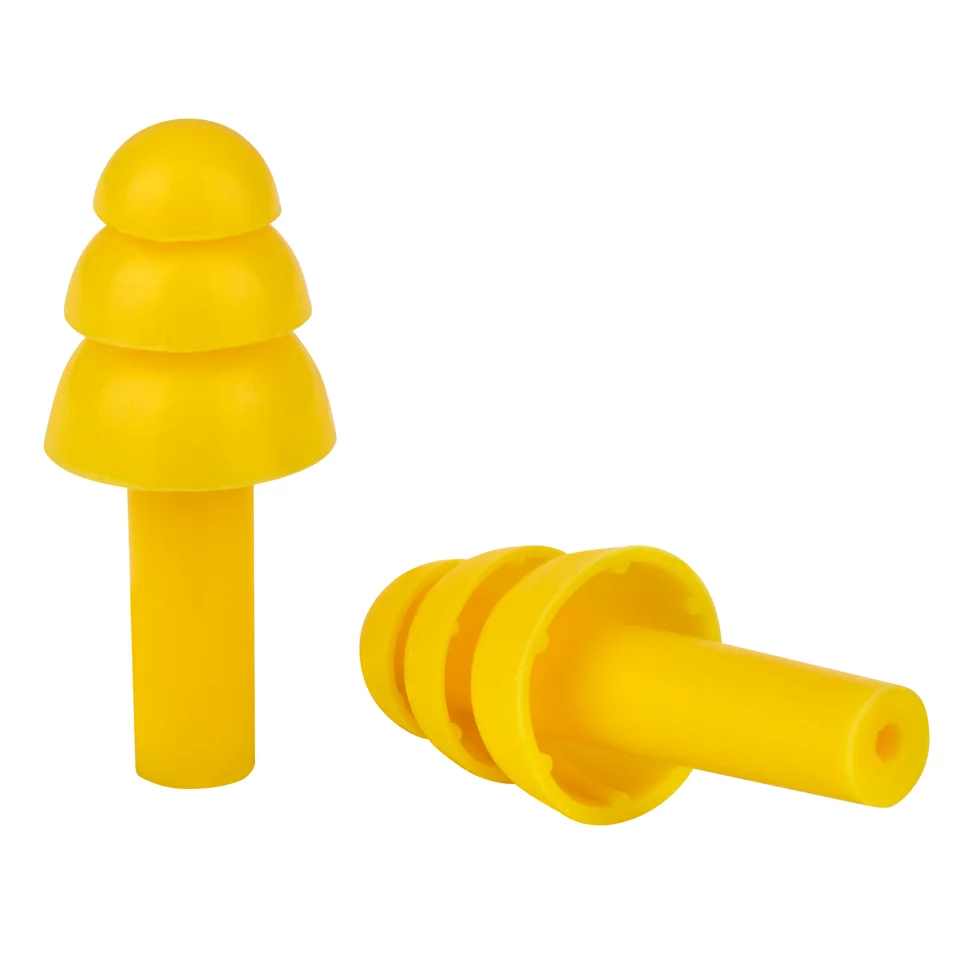
| EP001YReusable silicone earplugs EP001Y, SNR 32 | 24 dB | 65 dB(A)Too strong?Check for overprotection | 73 dB(A)RecommendedRecommended | 77 dB(A)RecommendedRecommended |
| EP906EP906 earmuffs EP906, SNR 30 | 23 dB | 66 dB(A)Too strong?Check for overprotection | 74 dB(A)RecommendedRecommended | 78 dB(A)RecommendedRecommended |
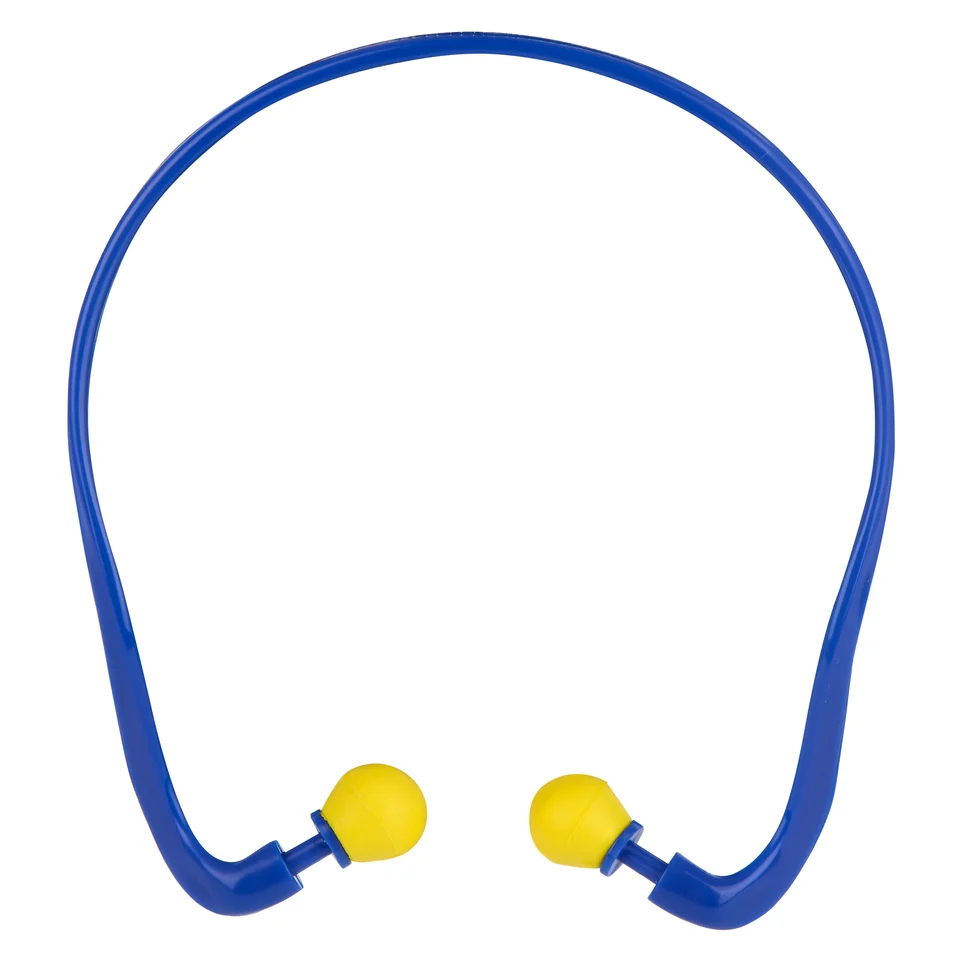
| EP100BYBanded earplugs EP100BY, SNR 29 | 21 dB | 68 dB(A)Too strong?Check for overprotection | 76 dB(A)RecommendedRecommended | 80 dB(A)RecommendedRecommended |
| EP904EP904 earmuffs EP904, SNR 28 | 20 dB | 69 dB(A)Too strong?Check for overprotection | 77 dB(A)RecommendedRecommended | 81 dB(A)Not rec.Not recommended |
| EP102BOBanded earplugs with conical tips EP102BO, SNR 27 | 19 dB | 70 dB(A)RecommendedRecommended | 78 dB(A)RecommendedRecommended | 82 dB(A)Not rec.Not recommended |
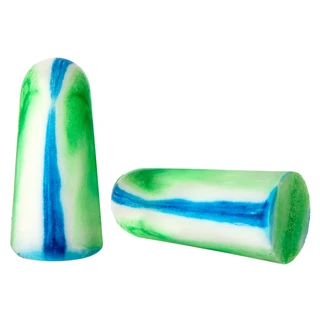
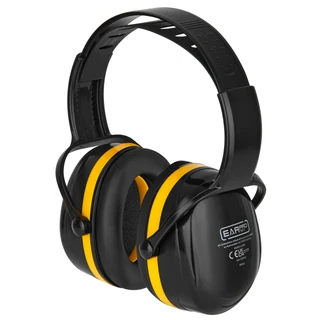
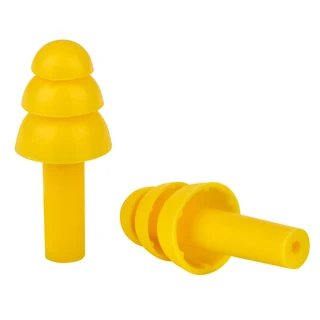
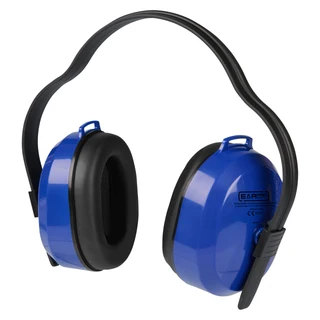
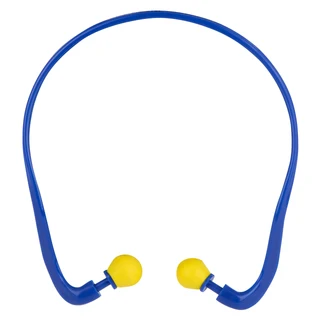
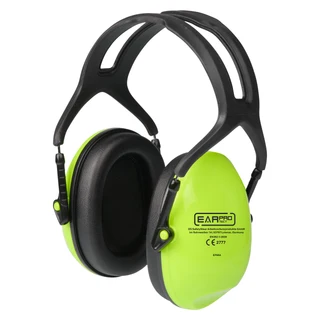
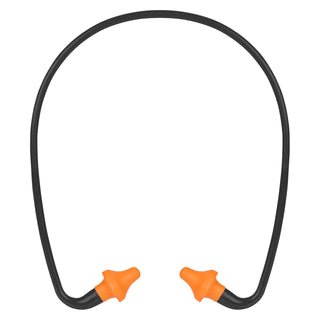
For the daily exposure of around 89 dB(A), only the EP102BO banded earplugs just reach the target range, with 70 dB(A) at the ear; everything else attenuates more than necessary by calculation. But hearing protection is worn during the noisy work. On the impact drill (97.2 dB(A), measured by AUVA on construction sites), every hearing protector in the table is in the target range. On the hand-held circular saw (101.3 dB(A)), disposable and reusable earplugs, the EP100BY banded earplugs and the EP902 and EP906 earmuffs fit; the EP904 and the EP102BO are just above, at 81 and 82 dB(A). For low-frequency noise, such as from excavators or bulldozers, the DGUV calculates with the L value; the hearing protection finder shows this.
Earplugs or earmuffs on site?
BG BAU gives clear guidance:
- Earmuffs if hearing protection is often put on and taken off, if you are prone to ear canal infections or produce a lot of earwax.
- Earplugs for continuous noise, if you sweat heavily under earmuffs, when you wear glasses or safety glasses at the same time and when hearing the direction of sounds matters.
On site, this usually means both: disposable or reusable earplugs for crews exposed to continuous noise, earmuffs for everyone who switches between noisy and quiet work.
Frequently asked questions
At what dB level is hearing protection required on site?
From a daily exposure of 85 dB(A) or a peak level of 137 dB(C), hearing protection must be worn; from 80 dB(A), the employer must make it available. According to BG BAU values, all trades listed except tilers are at 85 dB(A) or above.
Which hearing protection is best for construction sites?
The one that leaves 70 to 80 dB(A) at the ear during the noisy work and that your workers wear for the whole job. For work at around 97 to 101 dB(A), disposable and reusable earplugs, the EP100BY banded earplugs and the EP902 and EP906 earmuffs fit according to the HML check. A wearing trial is the best way to find out which version gets worn in practice.
How loud is construction noise in dB?
According to BG BAU, daily exposure on construction sites ranges from 84 dB(A) for tilers to 101 dB(A) for crash barrier installers. Individual tools are louder: AUVA measured an average of 101.3 dB(A) at hand-held circular saws on construction sites.
Who pays for hearing protection on site?
The employer. Health and safety measures must never involve workers in financial cost (Article 6(5) of Framework Directive 89/391/EEC; in the UK, section 9 of the Health and Safety at Work etc. Act 1974).
Sources
- BG BAU: Noise in the construction industry, practical guide (source DGUV, February 2011), in German
- AUVA Report 85 “Noise exposure at workplaces in carpentry and joinery workshops”, table 10, in German
- Directive 2003/10/EC on the minimum health and safety requirements regarding the exposure of workers to noise
- Council Directive 89/391/EEC on safety and health of workers at work (Framework Directive)
Typical values for estimation. They do not replace a measurement or a risk assessment. As of 5 October 2026.