How loud are woodworking machines?
| Machine | Level | Measurements |
|---|---|---|
| Hand-held circular saw | 98.2 dB(A) | 92 |
| Mitre saw | 97.2 dB(A) | 139 |
| Hand planer | 96.9 dB(A) | 75 |
| Four-sided planer | 96.2 dB(A) | 111 |
| Surface planer | 95.4 dB(A) | 212 |
| Panel saw | 95.3 dB(A) | 101 |
| Thickness planer | 95.2 dB(A) | 223 |
| Sliding table saw | 94.7 dB(A) | 255 |
| Compressed air gun | 94.5 dB(A) | 78 |
| Spindle moulder | 93.2 dB(A) | 215 |
| Jigsaw | 92.6 dB(A) | 53 |
| Hand router | 92.3 dB(A) | 69 |
| Band saw | 88.8 dB(A) | 191 |
| Edge banding machine | 86.9 dB(A) | 67 |
| Random orbital sander | 84.7 dB(A) | 44 |
| CNC machining centre | 84.7 dB(A) | 22 |
| Wide belt sander | 83.9 dB(A) | 105 |
| Background level, joinery workshop | 70.7 dB(A) | 108 |
The machine that runs longest in a joinery workshop is the sliding table saw: AUVA found an average of 27.1 minutes per day. At 95 dB(A), the daily exposure of 85 dB(A) is reached after 48 minutes.
Daily exposure: 86.7 dB(A) on average
The average daily exposure is 86.7 dB(A), with 90% of the values between 80.4 and 91.1 dB(A). For assessment, AUVA recommends assuming the 95th percentile, i.e. 91.1 dB(A). In joinery workshops, hearing protection therefore generally has to be worn, see Hearing protection requirements.
Which hearing protection in the joinery workshop?
| Hearing protection | Effective | Daily exposureapprox. 87 dB(A) | Sliding table sawapprox. 95 dB(A) | Circular sawapprox. 98 dB(A) |
|---|---|---|---|---|
| EP1227BWGDisposable foam earplugs EP1227BWG, SNR 37 | 26 dB | 61 dB(A)Too strong?Check for overprotection | 69 dB(A)Too strong?Check for overprotection | 72 dB(A)RecommendedRecommended |
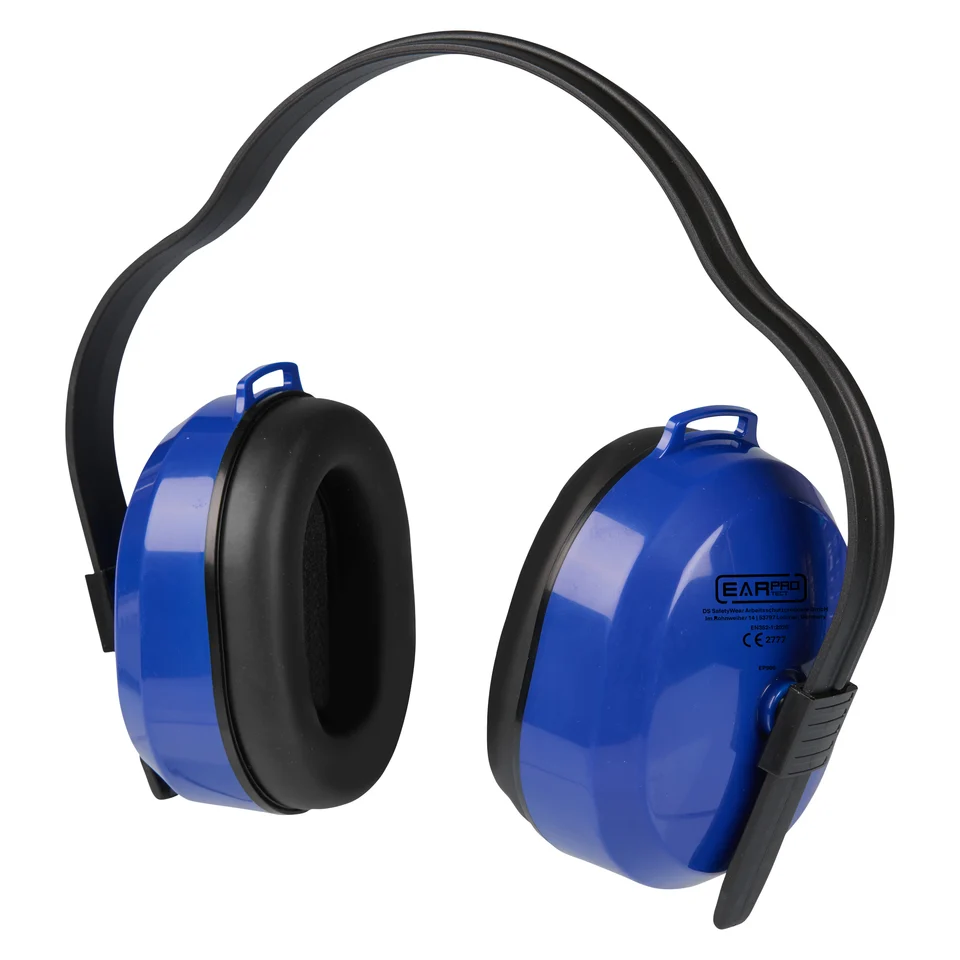
| EP902EP902 earmuffs EP902, SNR 33 | 26 dB | 61 dB(A)Too strong?Check for overprotection | 69 dB(A)Too strong?Check for overprotection | 72 dB(A)RecommendedRecommended |
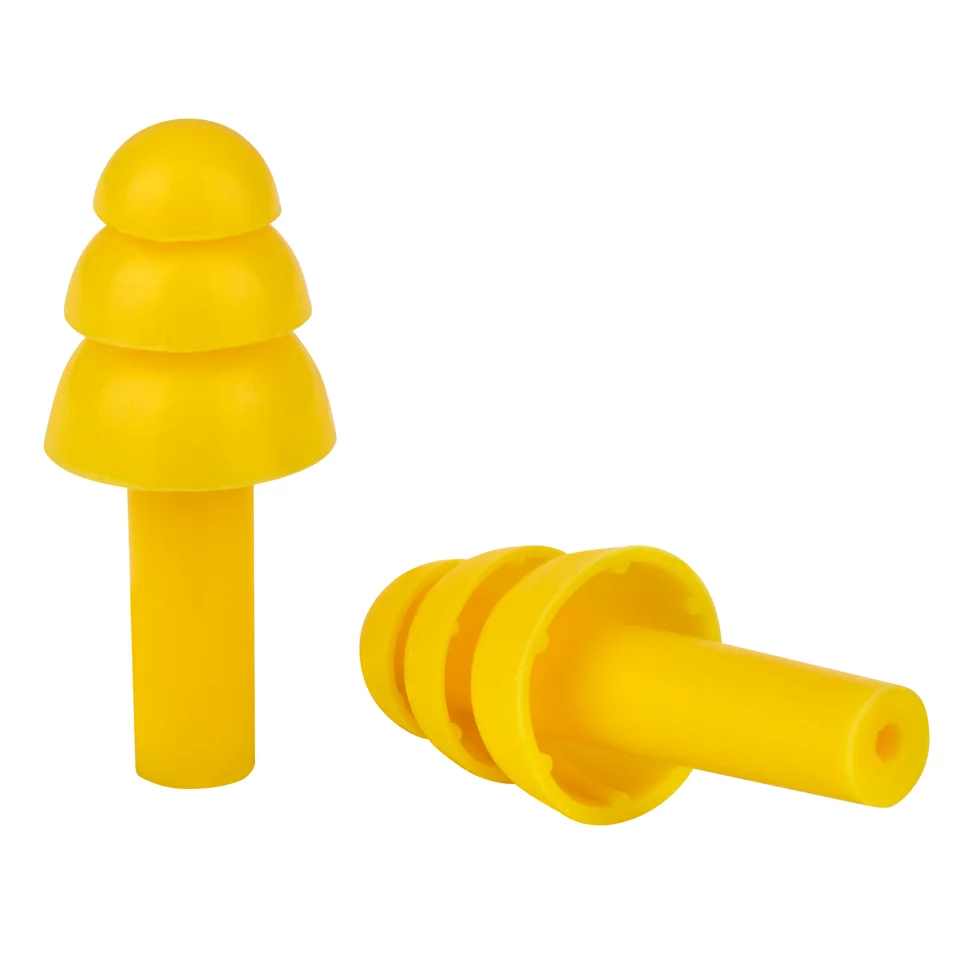
| EP001YReusable silicone earplugs EP001Y, SNR 32 | 24 dB | 63 dB(A)Too strong?Check for overprotection | 71 dB(A)RecommendedRecommended | 74 dB(A)RecommendedRecommended |
| EP906EP906 earmuffs EP906, SNR 30 | 23 dB | 64 dB(A)Too strong?Check for overprotection | 72 dB(A)RecommendedRecommended | 75 dB(A)RecommendedRecommended |
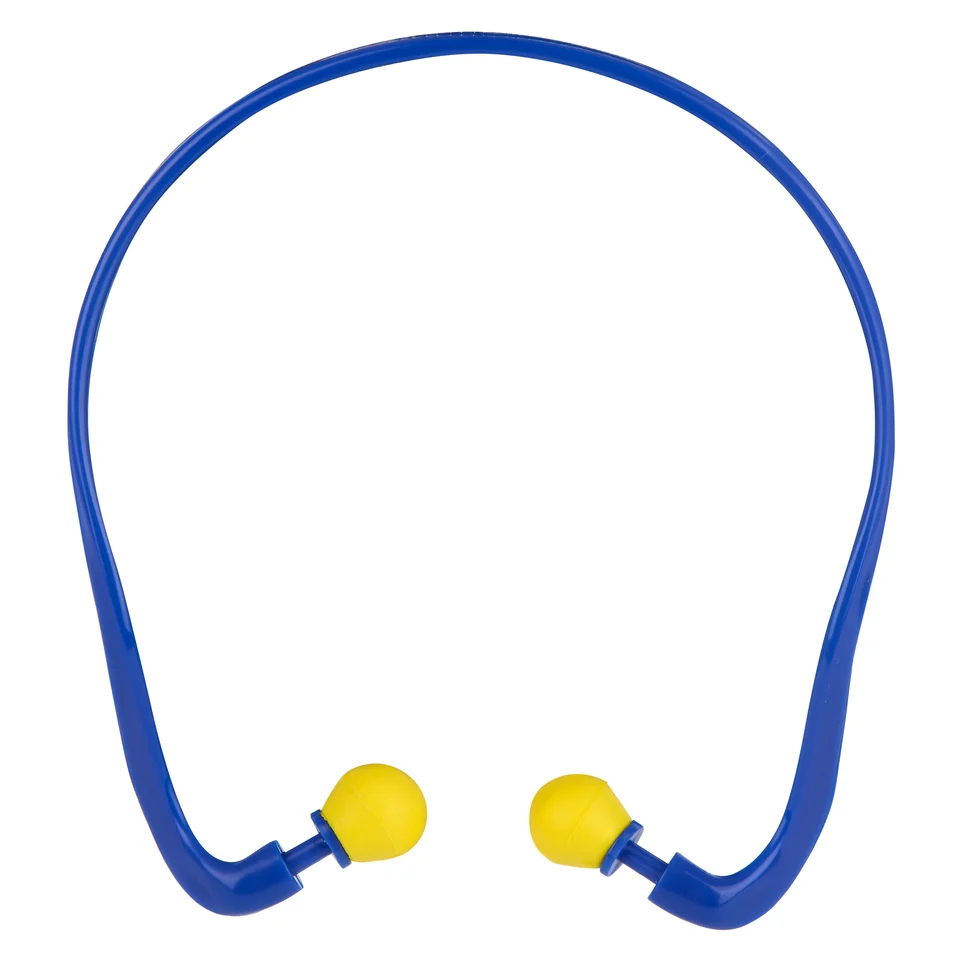
| EP100BYBanded earplugs EP100BY, SNR 29 | 21 dB | 66 dB(A)Too strong?Check for overprotection | 74 dB(A)RecommendedRecommended | 77 dB(A)RecommendedRecommended |
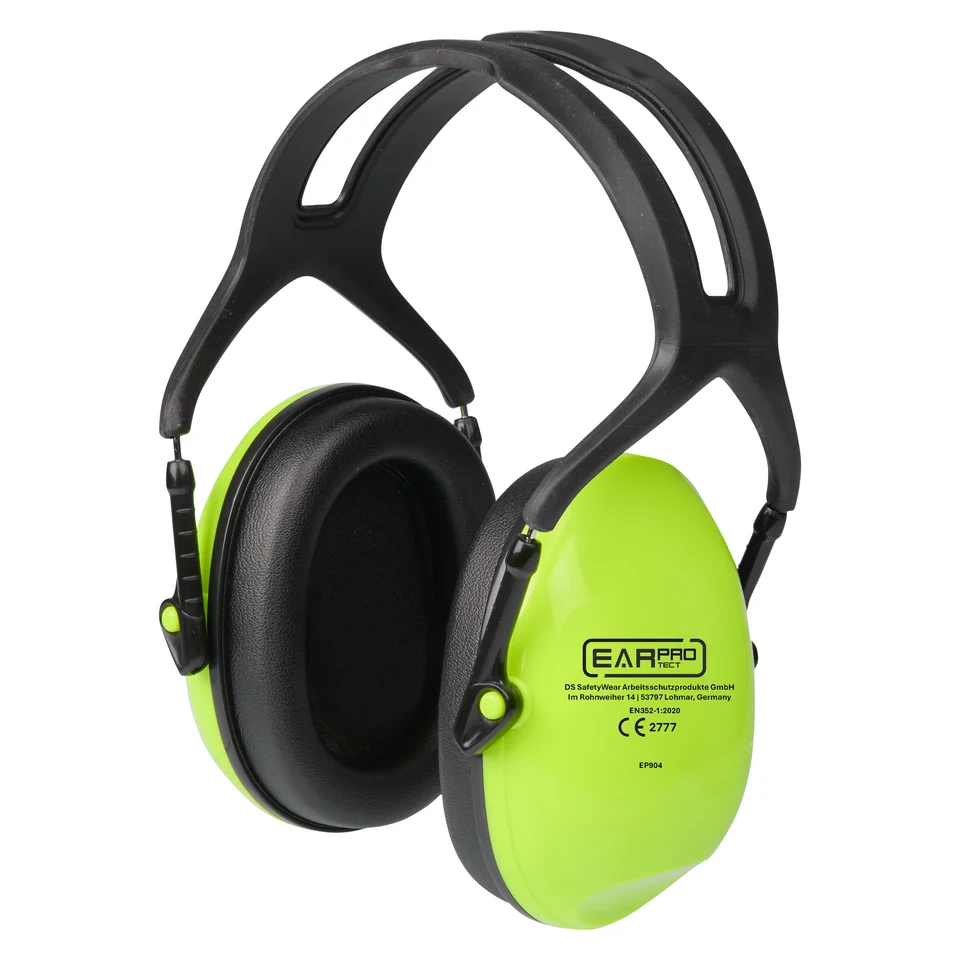
| EP904EP904 earmuffs EP904, SNR 28 | 20 dB | 67 dB(A)Too strong?Check for overprotection | 75 dB(A)RecommendedRecommended | 78 dB(A)RecommendedRecommended |
| EP102BOBanded earplugs with conical tips EP102BO, SNR 27 | 19 dB | 68 dB(A)Too strong?Check for overprotection | 76 dB(A)RecommendedRecommended | 79 dB(A)RecommendedRecommended |
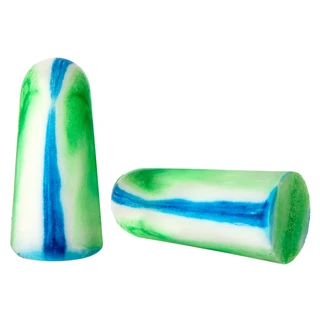
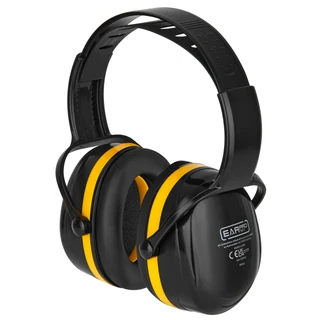
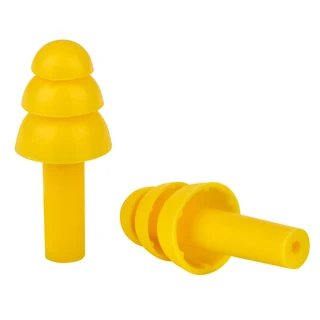
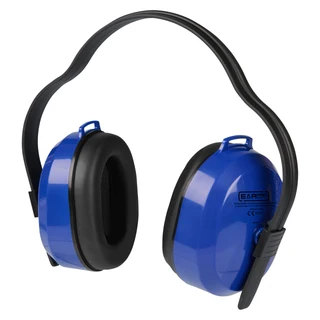
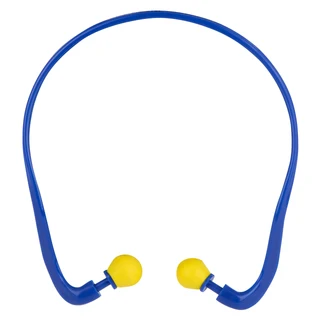
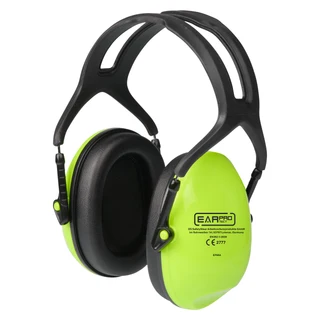
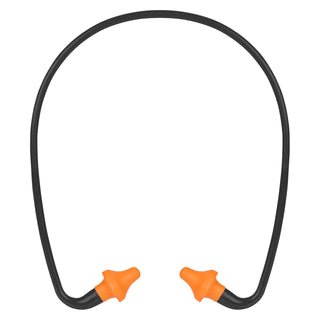
According to DGUV Rule 112-194, woodworking machines are in noise class HM, so the calculation uses the M value. On the sliding table saw at around 95 dB(A), reusable earplugs, banded earplugs and earmuffs such as the EP906 fit. On the hand-held circular saw at around 98 dB(A), every hearing protector in the table is in the target range. For the average daily exposure of 87 dB(A), the whole range attenuates more than necessary; but hearing protection is worn at the machine, not at the workbench.
In the workshop
- Hearing protection for every machine operation, even for short cuts.
- Anyone switching between bench and machine can put earmuffs on and off more quickly. For long machine work, BG BAU recommends earplugs.
- Low-noise saw blades: according to AUVA, a very effective and comparatively inexpensive measure.
- Use noise-reduced compressed air guns for blowing off; AUVA recommends them for all workplaces.
Frequently asked questions
How loud is a sliding table saw?
94.7 dB(A) on average, from 255 AUVA measurements in joinery and carpentry businesses. 90% of the values were between 86.5 and 99.0 dB(A).
How loud is a jigsaw?
AUVA measured an average of 92.6 dB(A) at jigsaws, from 53 measurements.
Which hearing protection for joiners?
For machine work at around 95 dB(A), reusable earplugs, banded earplugs or the EP906 and EP904 earmuffs fit according to the HML check. At mitre and hand-held circular saws at around 97 to 98 dB(A), disposable foam earplugs and the EP902 earmuffs also fit.
Is in-ear hearing protection suitable for joiners?
Yes. Earplugs are in-ear hearing protection. BG BAU recommends them for continuous noise and when safety glasses are worn at the same time. Reusable earplugs made of silicone or TPE can be cleaned and used several times.
Sources
- AUVA Report 85 “Noise exposure at workplaces in carpentry and joinery workshops”, table 10, in German
- BG BAU: Noise in the construction industry, practical guide (source DGUV, February 2011), in German
- Directive 2003/10/EC on the minimum health and safety requirements regarding the exposure of workers to noise
Typical values for estimation. They do not replace a measurement or a risk assessment. As of 5 October 2026.